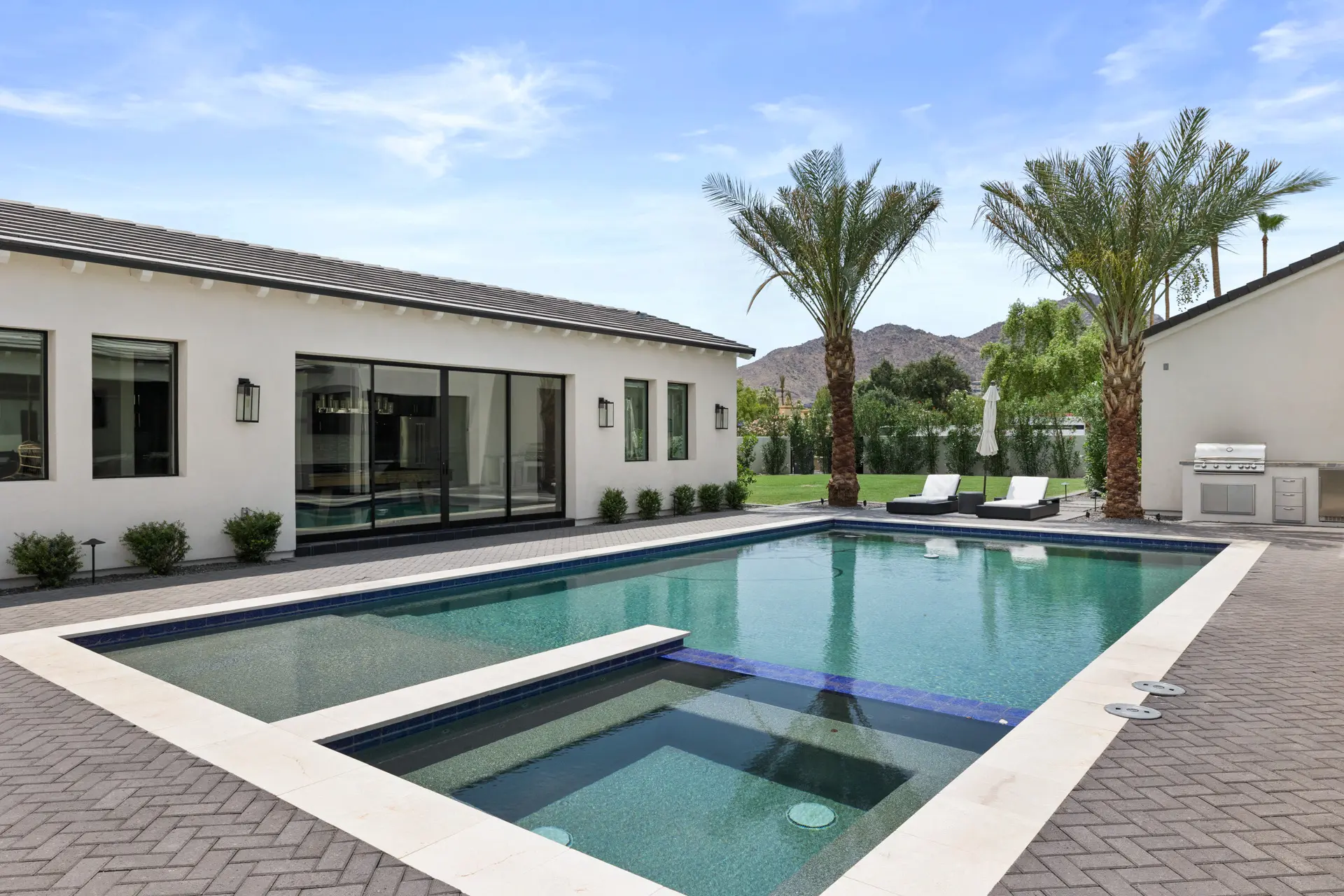
In Paradise Valley, a "teardown" isn't a fixer-upper — it's land with a house in the way. With almost no raw vacant land left in town, the vast majority of new custom homes here begin as a teardown: a buyer purchases an older property for the lot, demolishes the existing structure, and builds new. If you want to build in 85253, knowing how to find the right teardown is half the battle.
What is a teardown lot in Paradise Valley?
A teardown (also called a scrape) is an older home bought primarily for its land value. The existing house is demolished and a new custom estate is built on the same parcel. Buyers choose teardowns to get an established location, a large flat lot, or a protected view that simply isn't available in new-vacant-land form anymore.
Where to find teardown lots
There's no single "teardown listings" category on the big portals, so the best buyers work several channels at once:
- A curated teardown list. Our Teardown & Scrape Opportunities page flags older homes sitting on desirable lots — the ones most likely to pencil as a rebuild.
- The MLS, filtered smartly. Search older homes (pre-1980) on flat interior lots or view lots in established neighborhoods, then screen for lot size and buildable area rather than the condition of the existing house.
- Off-market and pocket listings. Many of the best scrape candidates never hit the public portals. A local agent typically hears about these first — see our off-market listings.
- Drive the older enclaves. Original 1950s–60s homes on great lots are visible from the street, especially along the Cheney corridor.
Which neighborhoods have the best teardown opportunities
The Cheney corridor — the established central neighborhoods along Cheney Drive — is the classic teardown territory: largely flat lots, mature citrus and landscaping, and many original homes from the 1950s and 1960s that trade specifically as rebuild sites. View-lot teardowns also surface on the slopes of Camelback and Mummy Mountain, which deliver spectacular sightlines but add hillside engineering and design review to the project.
How to evaluate a teardown before you buy
The house is coming down, so judge the land, not the finishes:
- Buildable area. Paradise Valley caps building at 25% of net lot area via its Floor Area Ratio — about 10,890 sq ft on a one-acre lot. That number, not the old home, tells you how much house you can build.
- Demolition and lot prep. Get a demo bid. Pools, basements, and abatement all add cost.
- Slope and hillside designation. Flat lots build most predictably; hillside parcels need engineering and extra Town review.
- Setbacks, height limits, washes, and easements, which further shape where the new home can sit.
- Utilities — confirm water, sewer, electric, and gas are already at the lot.
Every lot in our directory includes a Dream Home Estimator that applies the 25% FAR to that specific parcel, so you can see a realistic build size and cost range before you commit. For the full path once you own the land, see our guide to building on your lot in Paradise Valley.
Teardown vs. buying a finished new build
A teardown gives you the exact location and a home built entirely to your taste, but it's a longer, more involved project. If you'd rather skip demolition and design, compare the new construction and spec homes for sale that are already move-in ready.
The bottom line
Finding a Paradise Valley teardown is about sourcing the right land through the right channels, then verifying what you can build on it before you write an offer. If you'd like a shortlist of scrape candidates that fit the home you have in mind — including off-market ones — a member of our team is happy to put one together for you.
Frequently asked questions
- How do I find a teardown lot in Paradise Valley?
- There are four practical routes: (1) our curated Teardown & Scrape Opportunities list, which flags older homes on desirable lots; (2) the MLS, filtered for older homes on flat or view lots in established neighborhoods; (3) off-market and pocket listings, which a local agent hears about first; and (4) driving the older enclaves — especially the Cheney corridor — to spot original 1950s–60s homes. A local advisor can screen candidates for buildable area and demolition cost before you make an offer.
- What is a teardown in Paradise Valley?
- A teardown (or 'scrape') is an older home purchased mainly for its land. The buyer demolishes the existing house and builds a new custom home on the same lot. Because Paradise Valley has very little vacant land left, most new construction in town happens this way.
- Which Paradise Valley neighborhoods are best for teardowns?
- The established central enclaves along the Cheney corridor (Cheney Drive) are the classic teardown areas — largely flat lots, mature landscaping, and original homes from the 1950s and 1960s. View-lot teardowns also come up on the slopes of Camelback and Mummy Mountain, though hillside lots add engineering and design review.
- How much does it cost to demolish a house in Paradise Valley?
- Demolition is a real, separate line item that varies with the home's size, whether there's a pool or basement, asbestos or other abatement, and Town permitting. Always get a demolition bid and confirm lot-prep costs before you write an offer on an older home — they materially change your all-in budget.
Talk to a Paradise Valley specialist
Tell us about your project and a member of our team will reach out.